
Understanding the Science Behind Rising Temperatures, Droughts, and Extreme Weather Events
Representational image
As weather experts warn of a possible El Niño influence during the upcoming monsoon season, concerns are growing over its potential impact on agriculture, water resources and global temperatures. Though it originates in the Pacific Ocean, El Niño is among the most powerful climate phenomena affecting weather patterns across the world.
What is El Niño?
El Niño is a naturally occurring climate event characterized by the abnormal warming of sea surface temperatures in the central and eastern equatorial Pacific Ocean. Occurring every two to seven years, the phenomenon disrupts normal atmospheric circulation and alters weather patterns on a global scale.
The event forms part of the El Niño-Southern Oscillation (ENSO), a recurring climate cycle that influences rainfall, temperature and storm activity across continents.
The Science Behind El Niño
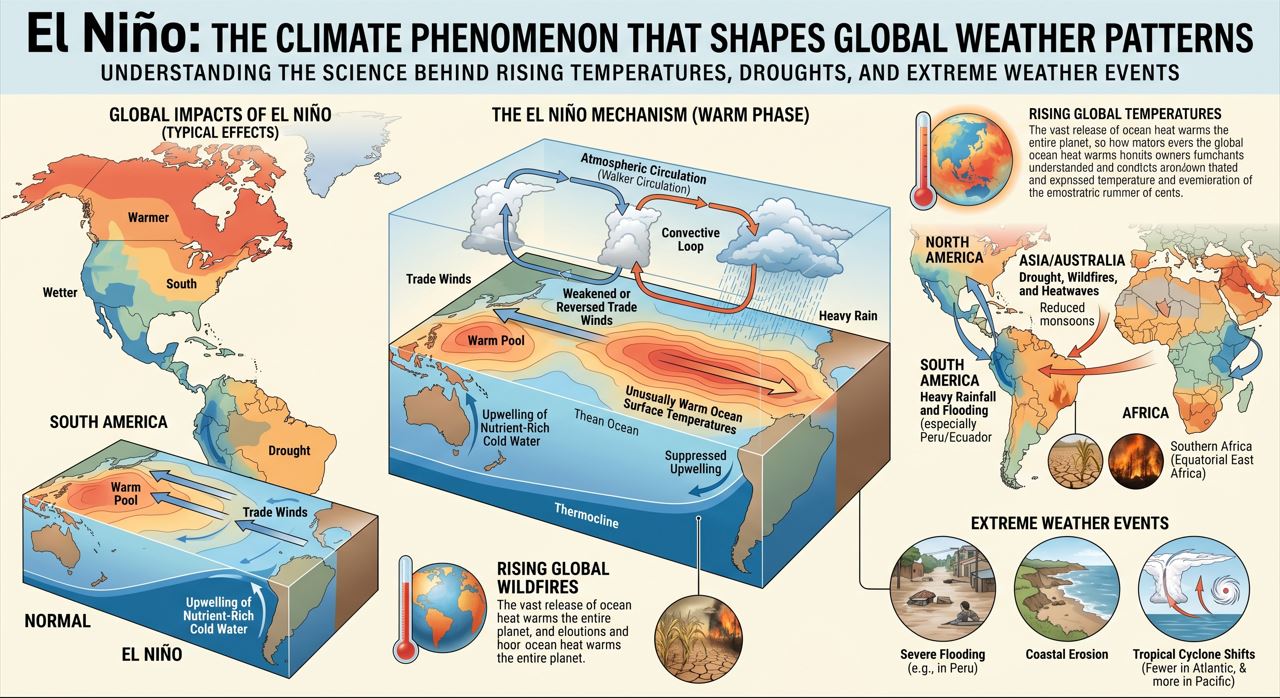
Under normal conditions, strong trade winds blow from east to west across the Pacific Ocean. These winds push warm surface waters toward Asia and Australia while allowing cold, nutrient-rich waters to rise along the western coast of South America through a process known as upwelling.
During an El Niño event, these trade winds weaken significantly or even reverse direction. As a result, the vast pool of warm water shifts eastward toward the coasts of Peru and Ecuador. The warmer ocean surface heats the atmosphere above it, triggering major changes in wind patterns and atmospheric circulation.
These changes create a chain reaction across the globe, influencing rainfall distribution, temperatures and storm systems thousands of kilometres away from the Pacific Ocean.
Global Weather Impacts
The effects of El Niño vary from region to region but are often dramatic.
Asia and Australia
Many parts of Asia and Australia experience reduced rainfall during El Niño years. The resulting dry conditions can trigger severe droughts, water shortages, crop losses and an increased risk of wildfires. In India, El Niño is closely monitored because it can weaken the southwest monsoon, the lifeline of the country's agricultural sector.
North and South America
While Asia often becomes drier, parts of the Americas experience the opposite effect. Heavy rainfall, flooding and landslides frequently affect countries along the eastern Pacific coast. Southern regions of the United States generally witness wetter and stormier winters, while northern areas tend to remain warmer and drier than usual.
Rising Global Temperatures
El Niño releases enormous amounts of stored ocean heat into the atmosphere, often contributing to record-breaking global temperatures. Several of the warmest years in recorded history have coincided with strong El Niño events.
Impact on Marine Ecosystems
The warming of Pacific waters also affects marine life. Reduced upwelling limits the supply of nutrients that support phytoplankton, the foundation of the ocean food chain. As food availability declines, fish populations such as salmon, tuna and anchovy can suffer significant losses, affecting fisheries and coastal economies.
Why It Matters for India
For India, the biggest concern is the impact on monsoon rainfall. A weaker monsoon can affect agricultural output, reservoir levels, drinking water supplies and rural livelihoods. Farmers and policymakers closely monitor El Niño forecasts to prepare for potential rainfall deficits and drought conditions.
Looking Ahead
Climate scientists continue to study how global warming may influence the intensity and frequency of El Niño events. While El Niño itself is a natural phenomenon, rising global temperatures could amplify its effects, making extreme weather events more severe and unpredictable.
As meteorological agencies keep a close watch on Pacific Ocean conditions, governments and communities are being urged to strengthen climate resilience, improve water management and enhance disaster preparedness to reduce the risks associated with future El Niño events.
Conclusion
El Niño remains one of the most influential climate drivers on Earth. Its ability to alter rainfall patterns, intensify heatwaves, trigger floods and disrupt ecosystems highlights the interconnected nature of the global climate system. Understanding its causes and impacts is essential for improving preparedness and mitigating risks in an era of increasing climate uncertainty.