
Sep 08: A 42-year-old man from Madagascar, who had been dependent on maintenance haemodialysis since March 2026, has returned to a dialysis-free life after receiving a kidney donated by his younger brother at KIMS Hospitals, Thane.
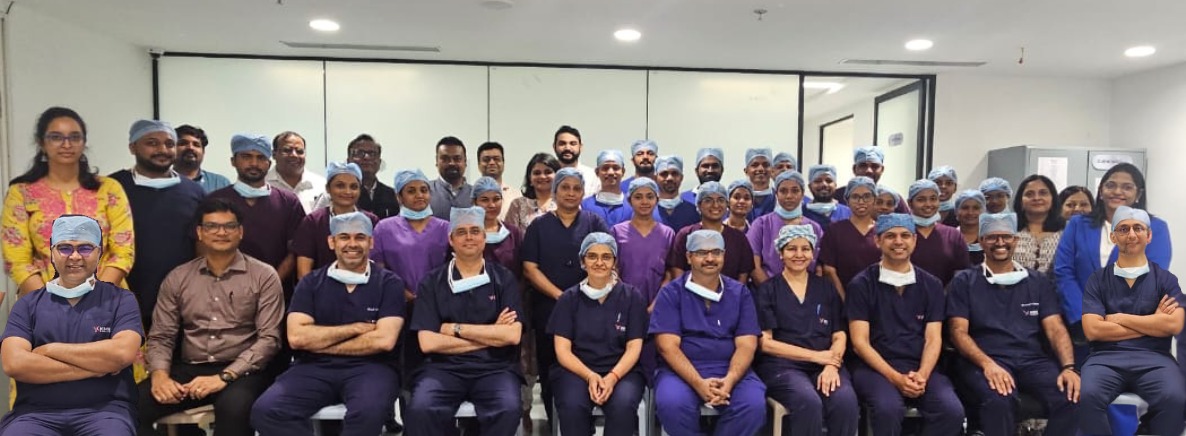
The recipient had a longstanding history of renal calculus disease, for which he had previously undergone surgical treatment. Over time, his condition progressed to advanced kidney failure, and by March 2026, he had begun maintenance haemodialysis — a routine that significantly affected his daily life, work and family.
His younger brother came forward as a living donor and travelled with him to India for the evaluation, surgery and recovery. However, the brothers had different blood groups, making them ABO-incompatible for transplantation.
ABO-incompatible kidney transplantation requires a carefully planned desensitisation pathway to reduce blood-group antibody levels and prepare the recipient's immune system to accept the transplanted kidney. Following complete transplant evaluation, statutory clearances and immunological preparation, the brothers proceeded with living-donor kidney transplantation.
The donor underwent laparoscopic donor nephrectomy. His postoperative recovery was comfortable and uneventful, and he was discharged on the fourth postoperative day.
The recipient underwent robot-assisted kidney transplantation. Following reperfusion, the transplanted kidney showed prompt function, with good urine output observed on the operating table. His urine output remained well maintained after surgery, while graft function was closely monitored. Serum creatinine showed a progressive decline, reflecting satisfactory early graft function, and importantly, he did not require dialysis at any point after the transplant. His recovery was uncomplicated, and he was discharged on the seventh postoperative day.
The transplant was performed using the only da Vinci Xi robotic surgical platform in Thane.
“This case demonstrates what can be achieved when advanced surgical technology, transplant expertise and comprehensive support systems come together. A kidney transplant performed through an incision of about six centimetres, in an ABO-incompatible setting, is a complex undertaking. It requires dedicated transplant infrastructure, robotic surgical capability, transplant immunology and apheresis support, intensive care and round-the-clock nephrology care. Our commitment is to ensure that patients from Thane and those travelling here from across the world have access to this level of specialised care.”
Mr Saurabh Gupta, Regional Director – Greater Mumbai, KIMS Hospitals
“This case marks the beginning of our robotic renal transplantation programme, and we are pleased that it begins with an ABO-incompatible transplant. Blood-group incompatibility was once a major challenge when considering a willing family member as a donor. With structured desensitisation, antibody titre monitoring and disciplined immunosuppression protocols, it can now be managed in appropriately selected patients. Combining this immunological approach with robotic recipient surgery offers the benefits of precision at both stages and can allow more families to explore living-donor transplantation.”
Dr. Pooja Binnani, Consultant Nephrologist, KIMS Hospitals, Thane
“We came from Madagascar not knowing how we would even make ourselves understood. The hospital arranged translators for us from the very first day, and after that nothing felt foreign. Every test, consent form and instruction was explained to us in a language we could follow. The clinical team looked after us like family. Because the surgery was done with the robot, the pain afterwards was far less than I had feared and I was on my feet quickly. My brother was discharged before me, and we went home together.”
Mikaela, Kidney Transplant Recipient, Madagascar
The successful transplant also involved coordination beyond the hospital, including referring clinicians and the family in Madagascar, statutory documentation and authorisation for international living-donor transplantation under applicable transplantation legislation, as well as international patient services covering visas, travel, accommodation and language interpretation throughout the patient's admission.
The case highlights how advances in transplant immunology and robotic surgery, supported by a multidisciplinary transplant team, can expand the possibilities for patients with advanced kidney failure — including those travelling internationally for specialised care.