
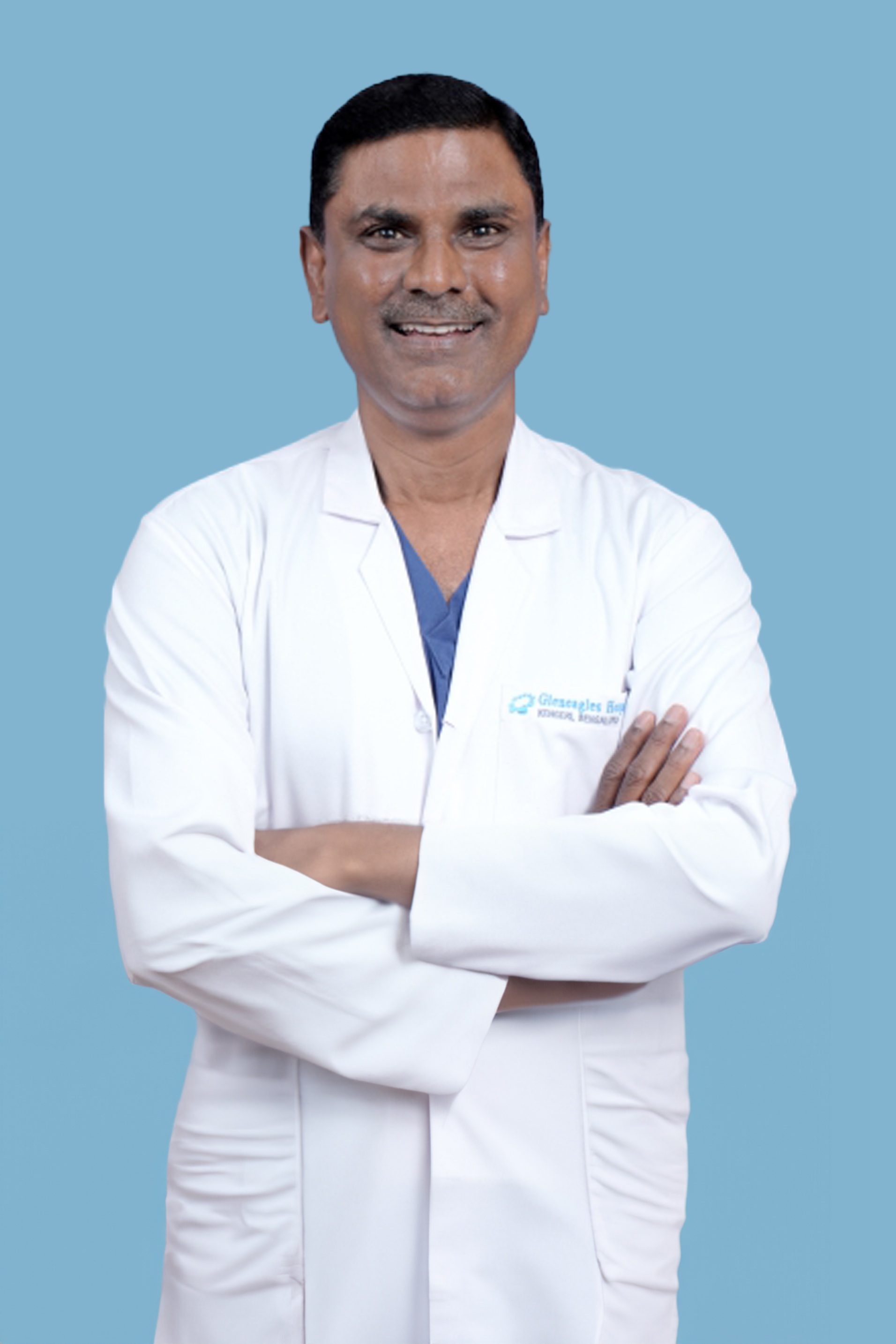
Bengaluru, Sep 08: Gleneagles BGS Hospital, Kengeri, Bengaluru, part of the Fortis Healthcare Network, is spotlighting the recovery of a 39-year-old man who regained mobility and independence after being left completely bedridden by a rare form of multiple myeloma, on the occasion of World Physiotherapy Day. Under the care of Mr. Babu George, Chief Physiotherapist and HOD, Gleneagles BGS Hospital, Kengeri, the patient underwent nine months of carefully monitored rehabilitation, progressing from being unable to sit independently and having severe weakness from the waist down to eventually walking independently, driving, cooking, going out and returning to work.
He was started on chemotherapy to treat the underlying cancer. However, prolonged immobility had resulted in severe muscle weakness, stiff joints and breathing-related complications. By the time he came under the rehabilitation team's care, he had very limited movement and loss of bowel and bladder control, making even basic activities difficult. At the same time, the fragility of his bones meant that any movement had to be carefully planned to avoid the risk of further injury.
A carefully monitored journey from bed to independent walking
Given the complexity of his condition, the rehabilitation team began with breathing exercises, positioning and gentle movements that could be performed safely in bed. The initial focus was on improving joint mobility and gradually rebuilding muscle strength, before progressing to sitting and balance training.
As his strength and stability improved, he was gradually introduced to standing and walking exercises. A spinal brace and knee brace were used to provide stability while he trained in parallel bars, before he progressed to a walker. The level of support and assistance was progressively reduced as his balance and strength improved. Rehabilitation continued for nine months, followed by ongoing outpatient care, alongside his chemotherapy, with the exercises and their intensity carefully adapted to his condition at every stage.
The transformation was gradual but significant. From being completely bedridden and unable to sit independently, the patient progressed to standing with support and eventually walking independently. He is now able to drive, cook and go out and has returned to work, requiring only limited assistance for some activities.
Mr. Babu George, Chief Physiotherapist and HOD, Gleneagles BGS Hospital, Kengeri, said,
“In cancer care, the focus is understandably on treating the disease, but the loss of strength, mobility and independence can be equally life-changing. Physiotherapy often begins only after a patient has become severely weak or bedridden, when recovery becomes much more difficult. In this case, we had to carefully manage the risk of further injury while helping him regain movement step by step. Seeing him regain his independence was a reminder that recovery is also about helping a person get their life back.”
Mr Ravi Bagali, COO, Gleneagles BGS Hospital, Kengeri, said,
“At Gleneagles BGS Hospital, we believe that caring for a patient goes beyond treating the disease. Every part of a patient's recovery, from medical treatment and rehabilitation to restoring mobility and independence, matters. Our holistic approach brings these aspects of care together, ensuring that patients receive the right support at every stage of their journey. This case is a strong example of how comprehensive care can help a patient not just recover but return to living an independent life.”