
Talking to children about mental health is essential for building emotional intelligence, resilience, and healthy communication habits. When children are given a safe space to express their feelings, they are more likely to develop confidence in managing emotions and seeking help when needed. These conversations should be ongoing, age-appropriate, and rooted in trust, patience, and understanding.
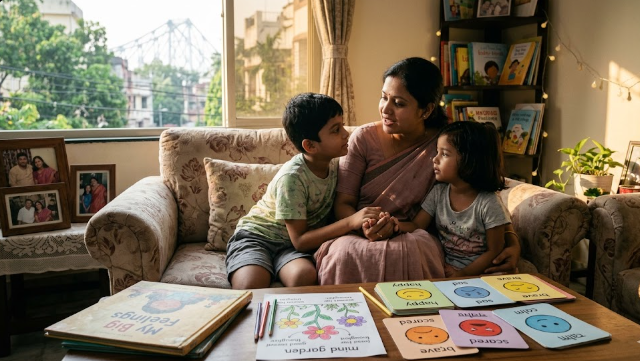
Creating a Safe and Supportive Environment
The foundation of any mental health conversation with children is safety. Children are more open when they feel heard, respected, and not judged. Parents and caregivers should choose calm moments to start conversations rather than times of emotional distress.
Active listening plays a key role. This means giving full attention, avoiding interruptions, and validating what the child is feeling. Simple responses like “I understand” or “That sounds really hard” can make a child feel supported. Using open-ended questions such as “How did that make you feel?” encourages children to share more than just yes-or-no answers.
Using Simple and Age-Appropriate Language
Children, especially younger ones, need clear and simple language to understand emotional concepts. Instead of using clinical terms like “depression” or “anxiety,” parents can describe feelings in relatable ways, such as “feeling very sad for a long time” or “feeling very worried inside.”
For toddlers and young children, linking emotions to everyday experiences is helpful. For example, a parent might say, “I feel grumpy today, but it’s not because of you—it’s just how I’m feeling.” This helps children understand that emotions are natural and not their fault.
Normalizing Emotions and Reducing Stigma
Children often believe that certain emotions are “bad” or should be hidden. It is important to normalize all feelings by explaining that everyone experiences emotional ups and downs.
Statements like:
-
“It’s okay to feel sad, angry, or worried.”
-
“Everyone has feelings, even adults.”
-
“Feelings change like weather.”
help children understand that emotions are a normal part of life. This reduces shame and encourages healthy emotional expression.
Helping Children Express Their Feelings
Children may not always have the words to express what they feel. Parents can support emotional expression through creative methods such as drawing, storytelling, or play.
For younger children, play-based learning is especially effective. Asking questions like “How do you think this character feels?” helps them connect emotions with situations. For older children, journaling or simple conversations can help them explore their inner experiences.
Teaching emotional vocabulary is also important. Words like happy, sad, nervous, frustrated, confused, and proud help children identify and communicate their feelings more clearly.
Teaching Healthy Coping Skills
Children need practical tools to manage emotions in a healthy way. Simple techniques can make a big difference:
-
Deep breathing exercises (like slowly blowing up a balloon)
-
Talking to a trusted adult
-
Taking a break when overwhelmed
-
Engaging in physical activity or play
-
Drawing or writing about feelings
These strategies help children regulate emotions instead of suppressing them.
Modeling Healthy Emotional Behavior
Children learn more from what they observe than what they are told. Adults should model healthy emotional behavior by expressing their own feelings calmly and appropriately. Saying things like “I feel stressed today, so I’m going to take a short break” teaches children how to manage emotions in real life.
Apologizing when mistakes are made and showing empathy toward others also reinforces emotional awareness and respect.
Recognizing When a Child Needs Help
Sometimes children show emotional distress through behavior rather than words. Warning signs may include sudden mood changes, withdrawal from friends, sleep disturbances, irritability, or loss of interest in activities they once enjoyed.
In such cases, it is important to seek help from a pediatrician, school counselor, or mental health professional. Early intervention can significantly improve a child’s emotional well-being and development.
Be Honest, Reassuring, and Patient
If a child is experiencing emotional challenges or is affected by mental health issues in the family, honesty is important. However, reassurance should always be included. Phrases like “You are not alone” or “We are here to help you” provide emotional security.
These conversations should not be one-time discussions but ongoing dialogues that evolve as the child grows. Their understanding and questions will change over time, and consistent communication helps maintain trust.
Conclusion
Talking to children about mental health is not just about explaining emotions—it is about building lifelong emotional strength. By creating a safe space, using simple language, validating feelings, and modeling healthy behavior, adults can help children grow into emotionally aware and resilient individuals.
The most powerful message a child can receive is:
“Your feelings matter, you are safe, and you can always talk to me.”
