
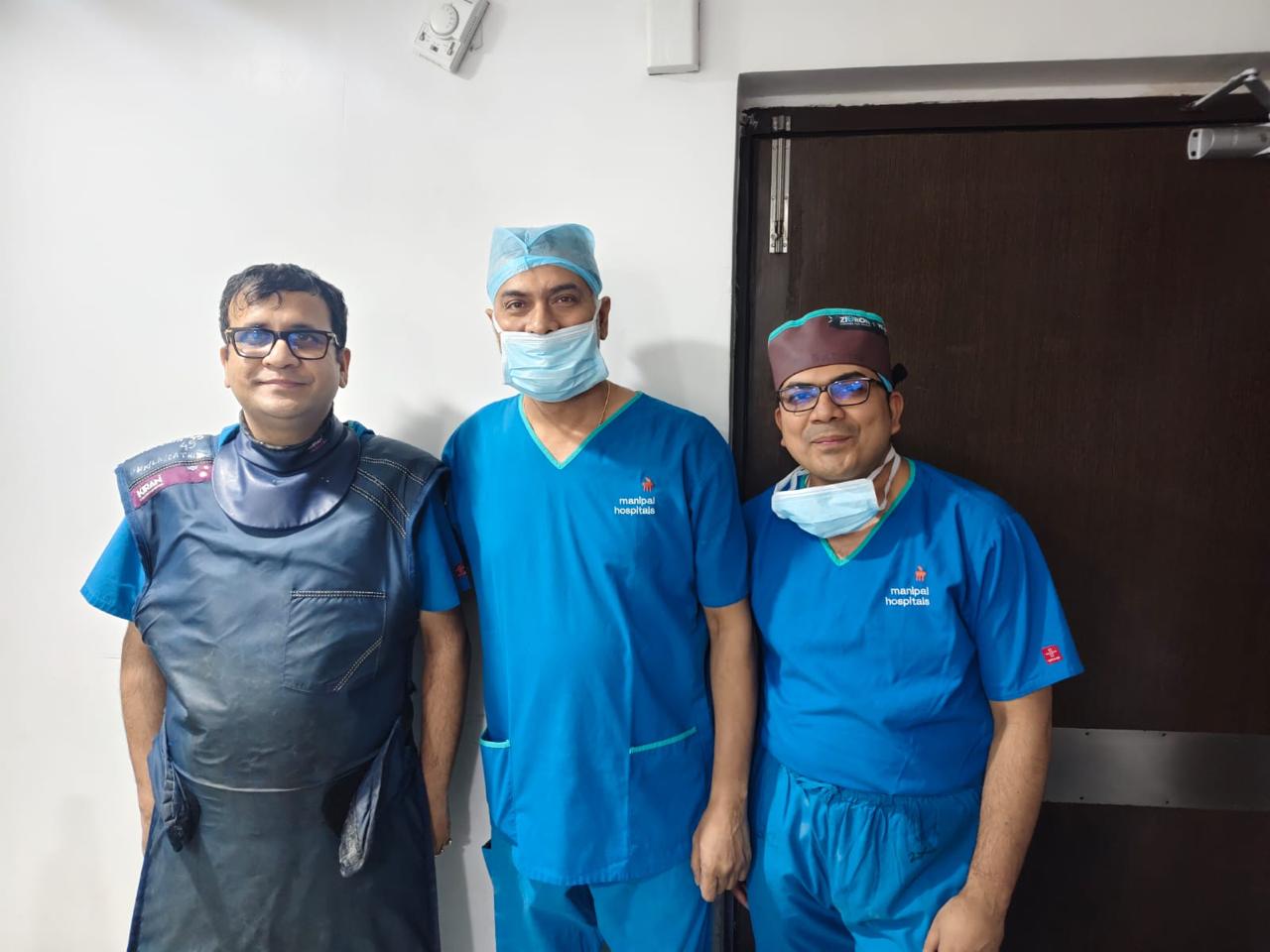
Mumbai/Kolkata, July 15: Doctors at Manipal Hospital, Dhakuria successfully diagnosed and treated a rare neurological condition called Idiopathic Intracranial Hypertension (IIH) (which is a is a rare neurological disorder in which the pressure inside the skull (intracranial pressure) increases without an obvious cause, such as a brain tumour, bleeding, or infection. The term "idiopathic" means the exact cause is unknown) in a 50-year-old woman who had been suffering from repeated fainting episodes, severe headaches, and progressive vision impairment for several months. Despite undergoing multiple cardiac evaluations, including angiography, the underlying cause of her symptoms remained undetected. A multidisciplinary team led by Dr. Koushik Dutta, Consultant – Neurology; Dr. Soumya Kanti Dutta, Consultant – Interventional Cardiologist; and Dr. Nirmalya Ray, Consultant – Neuroradiology, Manipal Hospital EM Bypass, with the support of Dr. Sukalyan Purkayastha, Director – Neurointervention & Endovascular Surgery, Imaging Sciences & Interventional Radiology, Manipal Hospital Mukundapur, and Dr. Samar Chakraborty, Consultant – Anaesthesiologist, Manipal Hospital Dhakuria, accurately identified the condition and successfully treated it through an advanced minimally invasive procedure.
Mrs. Lalita was suffering from these problems for a longer period. As these symptoms are mainly related to heart-related conditions, she underwent several cardiac checkups, including angiography, however, all the reports were normal. As her symptoms continued to worsen, doctors recommended an MRI Brain and a specialised scan called MR Venography, which examines the veins of the brain. The scans reflected a severe narrowing in one of the major veins responsible for carrying blood away from the brain. Further tests confirmed that this narrowing had caused an exceptional increase in pressure inside her brain. An eye examination revealed swelling of the optic nerve, indicating that the increased pressure had already started affecting her eyesight and the doctors identified the disease as Idiopathic Intracranial Hypertension (IIH), a rare condition where a pressure builds up inside the brain. In many patients, this happens because one or more veins draining blood from the brain become narrowed, preventing normal blood flow. As the pressure increases, patients may develop severe headaches, blurred vision, dizziness, vomiting and, in some cases, repeated fainting. If not diagnosed and treated early, the condition can permanently damage the optic nerve and lead to vision loss.
After reviewing the reports, the multidisciplinary team recommended venous sinus angioplasty and stenting, an advanced minimally invasive procedure used to open the narrowed vein. During the procedure, doctors inserted a tiny balloon through a blood vessel to widen the blocked area and then placed a small mesh tube called a stent to keep the vein open permanently. Restoring normal blood flow reduced the pressure inside the brain, helping relieve the patient's symptoms and protecting her vision.
Speaking about the procedure, Dr. Sukalyan Purkayastha, Director – Neurointervention & Endovascular Surgery, Imaging Sciences & Interventional Radiology, Manipal Hospital Mukundapur, said, "This procedure directly addresses the underlying cause of Idiopathic Intracranial Hypertension rather than simply managing its symptoms. By restoring normal blood flow through the narrowed venous sinus, we were able to reduce the pressure inside the brain, providing significant relief while preventing the risk of permanent vision loss. Advanced neurointerventional procedures like venous sinus stenting are transforming the way we treat carefully selected patients with IIH."
Commenting on the successful outcome, Dr. Soumya Kanti Dutta, Consultant – Interventional Cardiologist, Manipal Hospital Dhakuria, said, "This case demonstrates the importance of looking beyond the obvious diagnosis. Not every episode of fainting originates from the heart. When specialists from different disciplines work together, we can identify rare conditions early and offer advanced treatments that significantly improve patient outcomes and quality of life."
Highlighting the importance of advanced imaging in reaching the diagnosis, Dr. Nirmalya Ray, Senior Consultant – Neuro Interventional Radiologist, Manipal Hospital EM Bypass, said, "Modern imaging techniques allow us to detect conditions that are often missed during routine investigations. In this case, MRI Brain and MR Venography clearly identified the narrowed brain vein, enabling the treating team to make an accurate diagnosis and plan the appropriate treatment without delay."
Explaining the condition, Dr. Koushik Dutta, Consultant – Neurology, Manipal Hospital Dhakuria, said, "Persistent headaches, blurred vision, repeated fainting, and vomiting should never be ignored, especially when routine investigations fail to identify a cause. Conditions like Idiopathic Intracranial Hypertension are uncommon but highly treatable if diagnosed early. Delayed diagnosis can damage the optic nerve and lead to permanent vision loss. Early recognition and timely intervention are therefore crucial to relieve symptoms and preserve the patient's vision."
Highlighting the importance of teamwork, Dr. Samar Chakraborty, Consultant – Anaesthesiologist, Manipal Hospital Dhakuria, said, "Every complex procedure requires careful planning and close coordination between multiple specialties. From ensuring patient safety during the intervention to supporting recovery afterwards, teamwork plays a vital role in achieving successful outcomes in challenging cases like this."
Following the procedure, Mrs. Lalita recovered remarkably well. Her fainting episodes stopped completely, her headaches reduced significantly, and her vision improved. She was discharged in a stable condition and continues to do well. Expressing her gratitude, Mrs. Lalita said, "For months, I lived with fear because I never knew when I would suddenly lose consciousness. Every test I underwent failed to provide answers. The doctors at Manipal Hospital Dhakuria never stopped searching for the real cause of my illness. Today, I can spend time with my family without fear, and for that I will always remain deeply grateful to every doctor and healthcare professional who stood beside me throughout this difficult journey."
The successful treatment highlights the importance of early diagnosis, advanced imaging, minimally invasive neurointerventional procedures, and multidisciplinary care in identifying and managing rare neurological conditions. It also reflects Manipal Hospital Dhakuria's commitment to delivering advanced, patient-centric care through modern technology, clinical expertise, and collaborative treatment approaches.