
- Emergency surgery saves child after stomach and spleen move into chest and stomach twists on itself
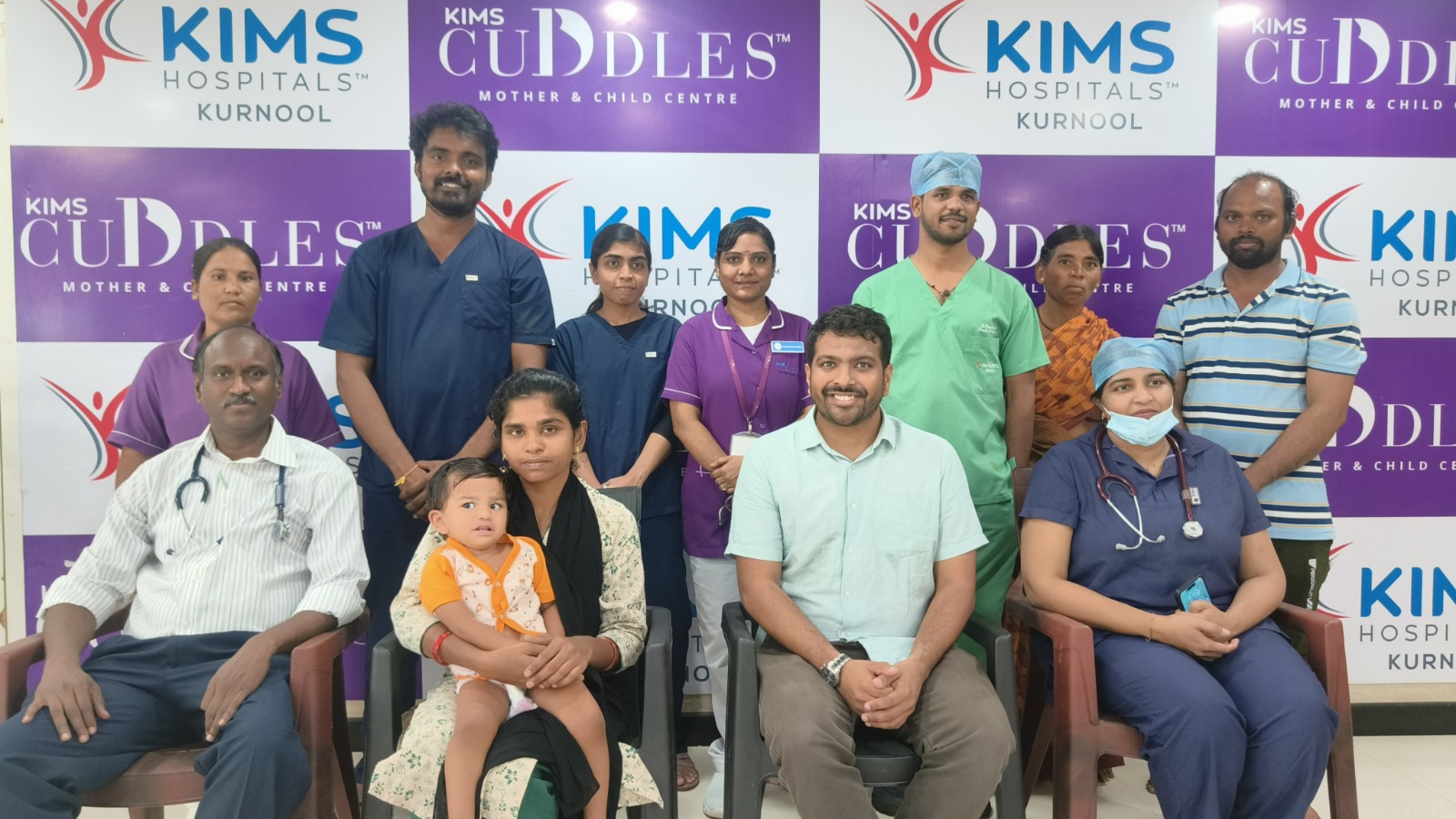
KURNOOL, Sept 12: An 22-month-old baby girl from Kadapa, who was brought to KIMS Cuddles Kurnool with severe abdominal distension and bleeding from the mouth, was successfully treated for a rare and potentially life-threatening condition in which his stomach had twisted on itself and moved into the chest along with the spleen.
The child was brought to the hospital after developing sudden abdominal distension and bleeding. A CT scan revealed that the stomach was not in its normal position and had moved upwards into the chest. The medical team also found a large collection of fluid in the chest and abdomen. Attempts to drain the collection and place a tube were challenging, and nearly 700 ml of blood-stained fluid was eventually drained.
Given the possibility of compromised blood supply to the stomach, the child was taken up for emergency surgery, said paediatric surgeon Dr Sai Kiran, who led the surgical team.
“During surgery, we found that the stomach had twisted around itself and, along with the spleen, had migrated into the chest through a defect in the diaphragm. The stomach was at risk of losing its blood supply and becoming permanently damaged. Fortunately, the blood supply had not been completely cut off, allowing us to preserve the stomach,” Dr Sai Kiran said.
The surgical team carefully brought the stomach and spleen back into their normal positions and repaired the opening in the diaphragm. The stomach was also secured in position to reduce the risk of it twisting again.
The child required ventilator support following the surgery. He also developed seizures due to the effects of toxins on the brain and was closely monitored and treated by the paediatric intensive care team.
Dr Vasu Burli, Dr Ravi Kiran, Dr Dilip Satya and Dr Sahithi G. were involved in the child's intensive care and recovery. Radiologist Dr Aravind Reddy and anaesthetist Dr Sruthi Vennela provided support during the treatment.
With coordinated care by the multidisciplinary team and the cooperation of the family, the child's condition gradually improved. He was subsequently discharged from the hospital in good health, the doctors said.
Early treatment is critical
Gastric volvulus occurs when the stomach twists around itself. If the twisting cuts off the blood supply, it can result in tissue death and become life-threatening. In this case, the condition was associated with a congenital defect in the diaphragm, known as diaphragmatic hernia, through which abdominal organs such as the stomach and spleen had moved into the chest.
Doctors advised parents not to ignore sudden abdominal distension in children. Persistent vomiting, inability to feed, breathing difficulty, severe weakness or changes in consciousness should prompt immediate medical attention.
“Gastric volvulus can progress rapidly when the blood supply to the stomach is compromised. Early diagnosis and emergency intervention are crucial to prevent permanent organ damage and save the child's life,” Dr Sai Kiran said.