
Sep 10: An 82-year-old with rectosigmoid cancer, advanced chronic kidney disease requiring thrice-weekly dialysis and cardiac risk successfully underwent a robot-assisted anterior resection at HCG Cancer Centre, Kolkata. He was walking the next morning and discharged five days later—an outcome demonstrating what careful optimisation can achieve in a high-risk elderly patient.
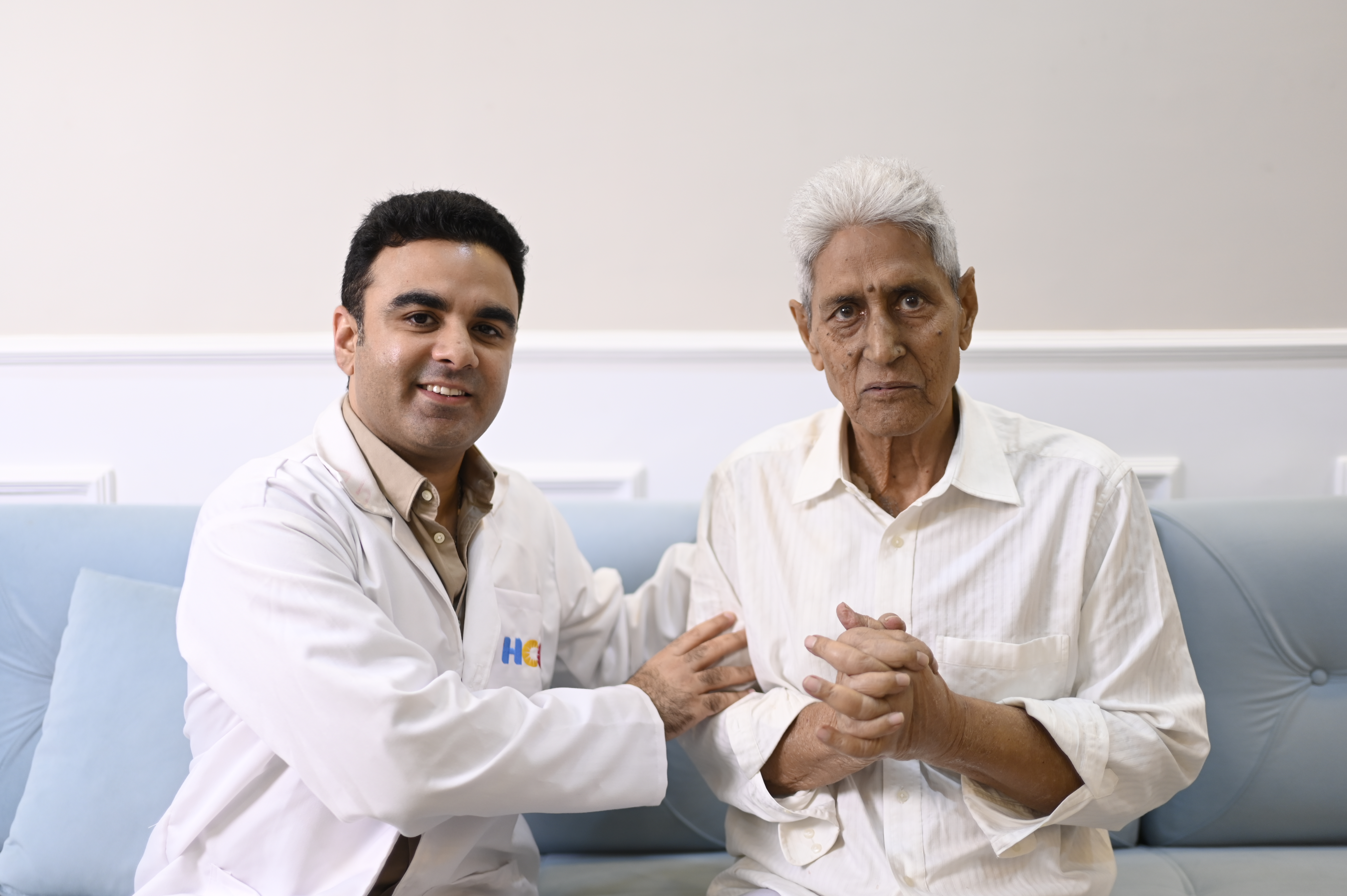
For nearly a year, Dakshineswar resident Pradip Kumar Bhattacharya had experienced constipation and abdominal discomfort. Over three months, the pain worsened and was accompanied by vomiting. What appeared to be diarrhoea was actually “spurious diarrhoea” caused by a partially obstructing tumour, explained Dr Karan Sehgal, Surgical Oncologist and Robotic Surgeon. Colonoscopy and biopsy confirmed the cancer.
The team obtained cardiology clearance and nephrology opinions, optimised his condition and arranged dialysis the day before surgery. On August 17, Dr Sehgal and his team removed the affected segment through small 8-mm incisions, with a 3–4-cm incision used to extract the specimen. Bhattacharya said the robotic approach had given him additional confidence.
The retired RPF Assistant Commissioner had received a Police Medal from President Dr Shankar Dayal Sharma in 1996. Three decades later, he faced—and overcame—another formidable challenge.
Fifteen days after surgery, he had not required further dialysis and his creatinine was around 2—an encouraging improvement, although not an assurance that dialysis would never again be needed.
“Age alone should never be a reason to deny treatment. With careful optimisation and counselling, he came through with flying colours,” said Dr Sehgal.
Dr Rupali Basu, RBH, HCG Cancer Hospitals & MGCHRI, Vizag, said,
“GLOBOCAN 2024 estimates 83,577 new colorectal cancer cases in India, making it the country’s fourth most common cancer. As our population ages, cancer care must be equipped for patients with multiple comorbidities. This outcome shows the value of multidisciplinary assessment, precise surgery and individualised care—judging fitness, not merely age.”