
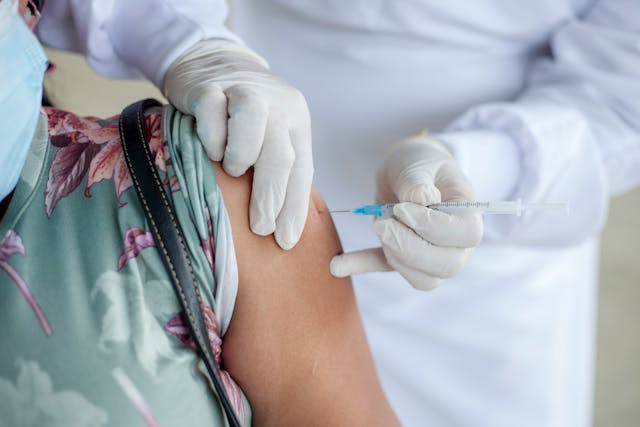
India’s healthcare system underwent a pivotal transformation in 2025, marked by a stronger push towards universal access, preventive care, and technology-enabled service delivery. Anchored by the twin pillars of Ayushman Bharat and an expansive national immunisation framework, the country made significant strides in strengthening public health outcomes and widening healthcare coverage.
As the year drew to a close, India recorded one of its most encouraging public health milestones. Full Immunization Coverage (FIC) surpassed 90 per cent nationwide and reached 98.6 per cent between April and October 2025. Beyond the numbers, this achievement reflected improved governance, deeper last-mile outreach, and growing public confidence in the healthcare system.
Immunisation: Reinforcing the First Line of Protection
Immunisation remains the backbone of India’s preventive healthcare strategy. Under the Universal Immunization Programme (UIP), vaccines against a wide range of life-threatening diseases now reach children across cities, villages, and remote habitations.
Focused initiatives such as Mission Indradhanush have played a crucial role in identifying and vaccinating zero-dose and partially immunised children, helping close long-standing coverage gaps. The high immunisation levels achieved in 2025 signal a decisive shift from fragmented outreach to systematic, data-driven delivery—ensuring preventable diseases are contained before they escalate into public health crises.
India’s experience with large-scale vaccination during the COVID-19 pandemic also left behind lasting institutional gains. Strengthened cold-chain logistics, improved supply management, and digital tracking systems continue to support routine immunisation efforts, making them more efficient and resilient.
Ayushman Bharat: Advancing Universal Health Coverage
Complementing preventive care is Ayushman Bharat–Pradhan Mantri Jan Arogya Yojana (AB-PMJAY), the world’s largest government-funded health insurance scheme. Designed to shield vulnerable households from catastrophic medical expenses, the programme offers cashless treatment of up to ₹5 lakh per family per year.
By the end of 2025, more than 42 crore Ayushman cards had been issued, extending health insurance coverage to over 12 crore families. A network of more than 33,000 empanelled hospitals—spanning public and private sectors—ensured access to secondary and tertiary care across the country.
A key policy expansion during the year was the inclusion of all senior citizens aged 70 years and above, regardless of income. This step significantly strengthened healthcare security for the elderly, a population segment often burdened by high medical costs and limited insurance access.
Strengthening Health Infrastructure Across Regions
Healthcare delivery rests on robust infrastructure, and 2025 witnessed sustained investment in this area. Under the PM–Ayushman Bharat Health Infrastructure Mission (PM-ABHIM), thousands of new and upgraded facilities were approved to enhance public health preparedness. These included Ayushman Arogya Mandirs, block-level public health units, diagnostic laboratories, and critical care blocks.
Such investments are particularly transformative for smaller towns and rural areas, where access to diagnostics and emergency care has traditionally been limited. The focus on decentralised infrastructure is steadily narrowing the urban-rural healthcare divide.
Simultaneously, tertiary care capacity expanded under the Pradhan Mantri Swasthya Suraksha Yojana, with new AIIMS institutions and medical college upgrades aimed at correcting regional imbalances in advanced healthcare services.
Expanding Medical Education and the Healthcare Workforce
The expansion of healthcare services was supported by rapid growth in medical education and human resources. Over the past decade, the number of medical colleges nearly doubled, while undergraduate and postgraduate medical seats increased substantially.
This growth contributed to an improved doctor-to-population ratio, backed by a rising pool of allopathic doctors and AYUSH practitioners. A stronger workforce has enhanced service delivery across primary, secondary, and tertiary care, while laying the foundation for long-term healthcare capacity.
Primary Care at the Core: Ayushman Arogya Mandirs
Primary healthcare emerged as a central pillar of India’s health strategy through the expansion of Ayushman Arogya Mandirs. These facilities now act as the first point of contact for millions, delivering comprehensive services that include maternal and child healthcare, management of non-communicable diseases, mental health support, diagnostics, and teleconsultations.
By shifting the focus towards prevention and early intervention, these centres are reducing pressure on hospitals, improving disease detection, and lowering treatment costs for families.
Digital Health: Integrating Care Through Technology
Technology played a defining role in healthcare reform during 2025. Under the Ayushman Bharat Digital Mission, hundreds of millions of digital health IDs were created, enabling individuals to securely access and manage their medical records.
This digital integration has improved continuity of care, reduced duplication of diagnostic tests, and strengthened coordination between healthcare providers. Telemedicine services further expanded access, particularly for patients in remote or underserved regions.
Prevention, Mental Health and Affordable Medicines
Preventive healthcare gained renewed momentum through large-scale screening programmes for cancers and non-communicable diseases, reaching crores of citizens nationwide. Cancer care infrastructure also expanded, improving access to timely diagnosis and specialised treatment.
Mental health services saw broader district-level coverage, supported by tele-counselling platforms that provided critical support to those in need. At the same time, affordability remained a policy priority. The growing network of Jan Aushadhi Kendras ensured access to quality generic medicines at significantly reduced prices, easing the financial burden on households.
Looking Ahead: A Healthier Path Forward
As India enters 2026, the progress achieved in 2025 reflects a healthcare system in transition—more inclusive, more preventive, and increasingly resilient. High immunisation coverage, expanded insurance protection, strengthened infrastructure, and digital innovation together signal a move away from reactive care towards long-term health security.
While challenges remain, the foundations laid through Ayushman Bharat and national immunisation programmes point to a future where quality healthcare is not a privilege, but a shared national commitment.