
Kolkata, July 30: Half a foot of cancerous bone was removed from 57-year-old Phakir Hembram’s left leg. Yet, aided by a megaprosthesis—a large implant replacing the excised bone and adjoining joint—he was back on his feet the day after limb-salvage surgery at HCG Cancer Centre, Kolkata.
Jadavpur resident Hembram, an assistant sub-inspector with CRPF, had been suffering from swelling and progressive pain that restricted movement of his left knee and finally rendered him bedridden for three months. A biopsy confirmed osteosarcoma of the distal femur — the lower end of the thigh bone adjoining the knee. The bone and surrounding soft tissue had been damaged, though a PET CT scan showed the cancer had not spread further.
He was first administered chemotherapy to reduce the tumour burden before surgery was planned. During the operation – the first such procedure performed at the hospital – the surgical team removed the tumour along with approximately 14cm of the distal femur, maintaining a three-centimetre margin of apparently healthy bone. The resulting defect was reconstructed using the megaprosthesis comprising femoral and tibial components.
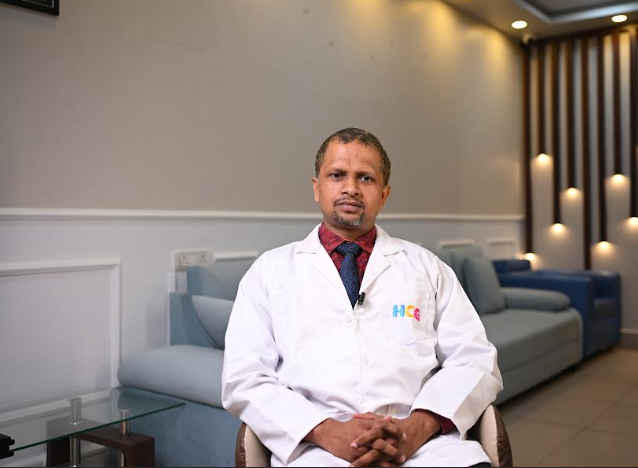
Dr Jyoti Prakash, Consultant, Orthopaedic Oncosurgery, HCG Cancer Centre, Kolkata, said: “Bone cancer does not invariably mean amputation. With timely diagnosis, chemotherapy and carefully planned surgery, limb salvage is possible in appropriately selected patients.”
Hembram was able to stand on the first postoperative day and subsequently began walking with support. He has achieved around 90-degree knee flexion. He continues rehabilitation and Dr Prakash believes he will be able to return to work in a few months.
Dr Rupali Basu, RBH, HCG Cancer Hospitals, said: “This case demonstrates the value of multidisciplinary cancer care, where medical oncology, specialised surgery, imaging, pathology and rehabilitation work together. Preserving mobility can profoundly influence a patient’s independence, confidence and quality of life.”